Storm Damage Tree Cleanup Tampa FL – Hurricane & Storm Recovery
When hurricanes and severe storms hit Tampa, fallen trees and broken branches create dangerous situations. Darrell’s Tree Service provides professional storm damage cleanup throughout Tampa and Hillsborough County. We respond quickly after storms to remove fallen trees, clear debris, and restore your property to safe condition.
Our experienced crews understand Tampa’s unique hurricane challenges. We’ve helped hundreds of homeowners recover from major storms, from Hurricanes Helene and Milton to severe thunderstorms and tropical systems. Available 24/7 for emergency response, we’re ready when disaster strikes.
Emergency Storm Cleanup: (813) 775-8978 – Available 24/7
Tampa’s Storm Reality: Recent Hurricane Impact
Tampa recently faced back-to-back hurricanes that caused severe tree damage across the area. Hurricane Milton’s estimated damage in Florida ranged between $21 billion and $34 billion, with trees toppling onto roofs, cars, and homes throughout the region.
Following Hurricanes Helene and Milton, the City of Tampa removed more than 1.3 million cubic yards of storm debris from city streets and neighborhoods – enough to fill Tampa’s Rivergate Tower nearly four times. This massive cleanup took over 300 contracted haulers working seven days a week.
Hillsborough County responded with over 150 specialized trucks collecting debris seven days a week, removing an estimated 94% of the overall 4.8 million cubic yards of debris stretching across nearly 900 miles of unincorporated areas.
These numbers show the reality for Tampa homeowners: hurricanes bring massive tree damage, and professional cleanup is essential for recovery.
Storm Damage We Handle
Our storm damage cleanup services cover all types of tree-related disaster recovery:
Fallen Trees
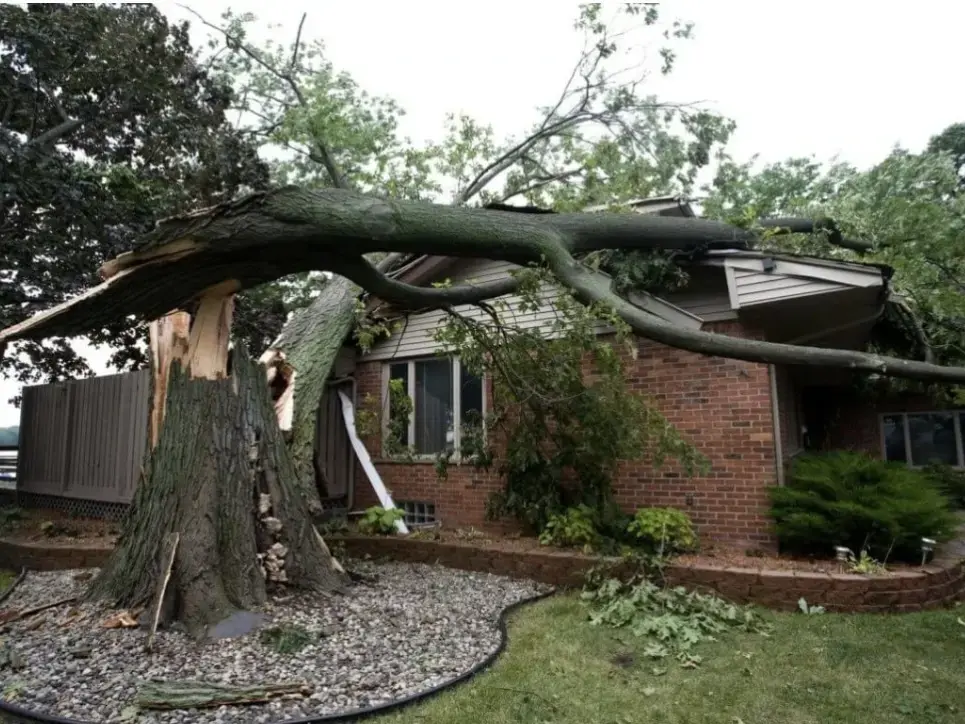
Trees that fall completely during storms need immediate removal. Whether the tree fell on your house, garage, car, or yard, we safely remove it and haul away all debris. We work carefully to prevent additional damage during removal.
Broken and Hanging Branches
Partially broken branches are extremely dangerous. They can fall without warning, especially during the next storm or high wind event. We remove all hanging, cracked, and damaged branches to eliminate hazards.
Leaning or Uprooted Trees
Trees knocked off-balance by storms may not fall immediately, but they’re unstable. High winds combined with saturated soil cause trees to lean or partially uproot. These require professional assessment and removal before they fall on structures.
Canopy Damage
Severe winds shred tree canopies, leaving split trunks and torn branches throughout the tree. We assess storm-damaged trees to determine which can be saved through corrective pruning and which need removal.
Multiple Downed Trees
Major hurricanes often knock down several trees on one property. We handle large-scale cleanup, prioritizing dangerous situations first, then systematically removing all storm debris.
Debris Removal and Haul-Away
We don’t just cut up fallen trees – we haul everything away. All wood, branches, leaves, and debris are removed from your property. You’re left with a clean, safe yard ready for recovery.
Our Storm Damage Cleanup Process
When you call for storm cleanup service, here’s how we help:
Step 1: Emergency Assessment
After a storm, we assess all tree damage on your property. We identify immediate dangers like trees on structures or hanging branches. We prioritize emergency situations and create a cleanup plan.
Step 2: Safe Removal
Our crews use professional equipment to safely remove storm-damaged trees. For trees on buildings, we carefully remove sections to minimize additional damage. All work follows strict safety protocols.
Step 3: Hazard Elimination
We remove all hanging branches, split limbs, and unstable trees. This prevents further damage when the next storm arrives. Tampa’s hurricane season runs June through November, so preventing future problems matters.
Step 4: Complete Debris Cleanup
We haul away all storm debris – trees, branches, leaves, everything. Your property is left clean and safe. No piles of wood sitting in your yard for weeks.
Step 5: Property Assessment
We evaluate remaining trees for storm damage that’s not immediately visible. Internal cracks, root damage, and structural problems may appear after storms. We identify trees that need monitoring or removal.
Why Tampa Storms Cause Severe Tree Damage
Understanding why Tampa’s storms are so destructive to trees helps prevent future damage:
Hurricane-Force Winds
Hurricane Milton brought significant damage across central Florida, particularly near Tampa. Sustained winds over 70 mph snap branches and topple entire trees. Even tropical storm winds of 40-60 mph damage trees, especially those already weakened by age or disease.
Saturated Soils
Florida’s heavy rainfall saturates soil around tree roots. When hurricane winds hit water-logged ground, trees lose their anchor. Even healthy trees with strong roots can topple when soil can’t hold them. This combination of wind and saturated soil is particularly destructive.
Tornado Activity
At least 46 confirmed tornadoes touched down in Florida ahead of Hurricane Milton between October 8-9, becoming the largest single day of tornadoes in state history. Tornadoes cause localized extreme damage, twisting and snapping trees that would survive regular hurricane winds.
Lightning Strikes
Tampa is the lightning capital of the United States. Lightning strikes during storms can shatter trees from the inside, making them brittle and prone to failure. Lightning-damaged trees may look fine externally but are structurally compromised.
Successive Storm Impact
When multiple storms hit within weeks, trees don’t have time to recover. Hurricanes Helene and Milton struck Tampa just two weeks apart, compounding damage. Trees weakened by the first storm often fail during the second.
Old and Diseased Trees
Storms expose which trees were already in decline. Trees with root rot, trunk decay, or disease fail first during high winds. These trees should be removed before hurricane season to prevent storm damage.
Hurricane Season Preparation
The best storm cleanup is prevention. Here’s how to prepare your Tampa property before hurricane season:
Pre-Season Tree Inspection
Have a certified arborist inspect your trees in late winter or early spring. We identify hazardous trees, weak branches, and structural problems. Removing problem trees before June reduces storm damage risk significantly.
Strategic Pruning
Proper pruning reduces wind resistance and removes weak branches. Thinning dense canopies allows wind to pass through rather than catching and pushing trees over. Research from the University of Florida confirms properly pruned trees withstand storms better.
Dead Wood Removal
All dead branches should be removed before hurricane season. Dead wood breaks easily in high winds and becomes dangerous projectiles. Regular deadwood removal is essential hurricane preparation.
Root Health Assessment
Trees with compromised root systems fail during storms. We assess root health and soil conditions. Trees with severe root rot or shallow roots near structures should be removed proactively.
Cabling and Bracing
Some valuable trees with structural weaknesses can be supported using cables and braces. This isn’t appropriate for all trees, but it can save specimen trees that would otherwise need removal.
Working with Insurance After Storm Damage
Understanding insurance coverage helps with storm cleanup costs:
What’s Typically Covered
Most homeowners insurance covers tree removal when storms knock trees onto insured structures like your house, garage, or fence. Coverage usually includes removal of the tree from the structure and necessary repairs.
What’s Usually Not Covered
Insurance typically doesn’t cover removing trees that fall in your yard without hitting structures. Preventive tree removal before storms also isn’t covered. Cleanup of general yard debris may not be included.
Documentation Requirements
Take photos and videos of all storm damage before cleanup begins. Document the fallen tree’s position, damage to structures, and overall property impact. This evidence supports insurance claims.
FEMA Assistance
After major disasters like Hurricanes Helene and Milton, FEMA may provide assistance for storm debris removal. The City of Tampa and Hillsborough County coordinate with FEMA to qualify for federal reimbursement, which helps offset cleanup costs for residents.
Working with Adjusters
We can provide documentation, photos, and estimates to help with insurance claims. Our detailed reports show what work was necessary and why. Many insurance companies prefer working with licensed, insured tree services.
Tampa Storm Cleanup Service Areas
We provide storm damage cleanup throughout Tampa and Hillsborough County:
- South Tampa
- Hyde Park
- Davis Islands
- Seminole Heights
- Tampa Palms
- Carrollwood
- Westchase
- Town ‘n’ Country
- Brandon
- Valrico
- Riverview
- Fishhawk
- Temple Terrace
- Plant City
- All of Hillsborough County
After the Storm: Tree Health Recovery
Even trees that survive storms may need attention:
Post-Storm Tree Assessment
Have surviving trees inspected after major storms. Internal damage, root problems, and structural issues may not be immediately visible. Our arborists identify problems before trees become hazardous.
Corrective Pruning
Storm-damaged trees often need corrective pruning to remove broken branches and reshape the canopy. Proper pruning helps trees recover and prevents future problems.
Root Zone Care
Storms stress tree roots, especially in saturated soils. We can assess root health and recommend treatments to help trees recover. Some trees may need removal if root damage is severe.
Disease Prevention
Storm-damaged trees are vulnerable to disease and pest infestation. Broken branches create entry points for fungal infections and wood-boring insects. Prompt cleanup and proper pruning reduce these risks.